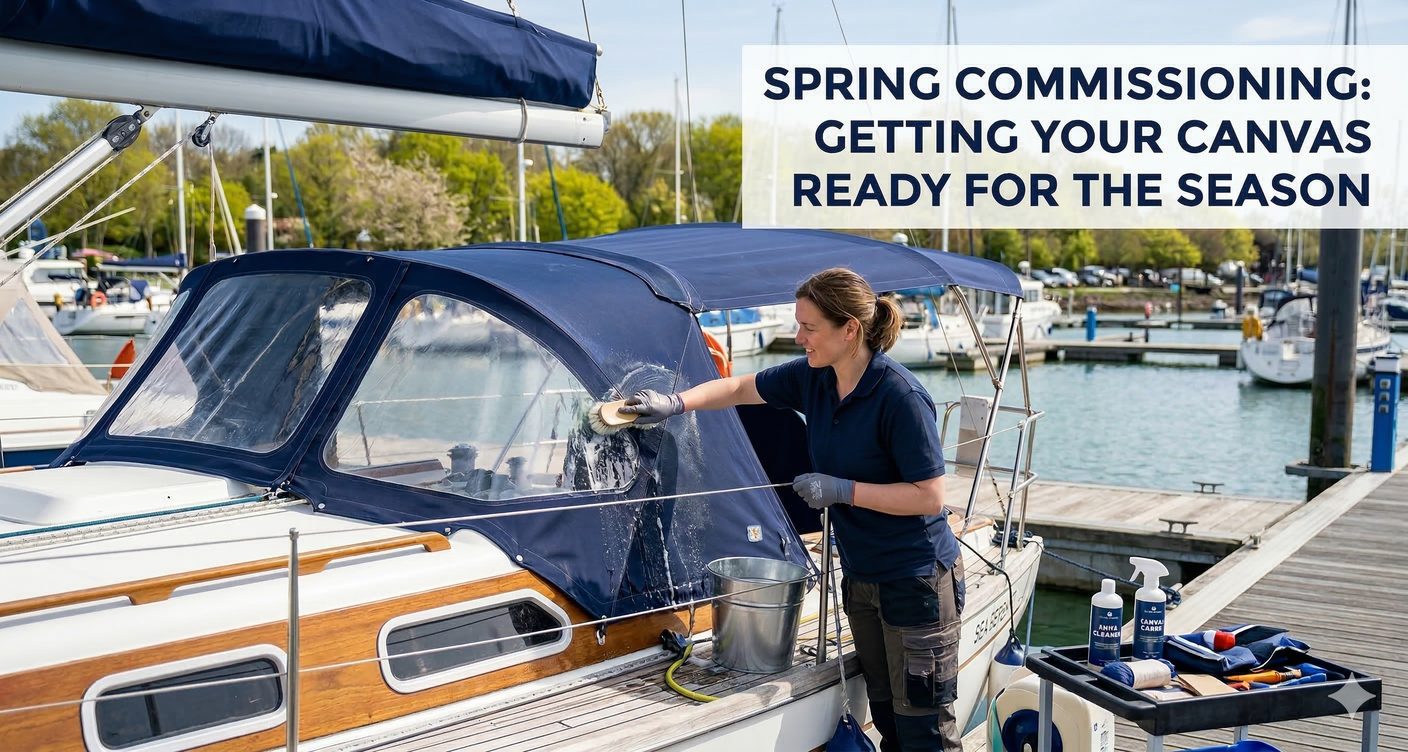
As the days lengthen and the Solent starts to warm up, it’s time to think about getting your vessel’s canvas ready for the sailing season. A proper spring check can extend the life of your sprayhood, covers and enclosures by years — and catch small problems before they become expensive ones.
Your Spring Canvas Checklist
1. Clean Before You Inspect
Start with a thorough clean. Use lukewarm water and a gentle, non-detergent soap — never household cleaners, bleach or washing-up liquid. These strip the water-repellent coating from acrylic canvas and weaken the fabric. A soft bristle brush works well for removing winter grime and green algae.
For stubborn mildew spots, a specialist marine canvas cleaner like Fabsil or Star Brite is worth the investment. Apply it, leave it to work, then rinse thoroughly with fresh water.
2. Check Every Seam and Stitch
UV damage hits stitching harder than fabric. Run your fingers along every seam — if the thread feels brittle, crumbles or pulls away easily, it needs re-stitching before it fails at sea. Pay particular attention to the seams along the top of your sprayhood where UV exposure is greatest.
3. Inspect Your Windows
PVC windows cloud and stiffen over time, especially if they’ve been folded while cold. Check for cracks, yellowing and loss of flexibility. Cloudy windows can sometimes be restored with a specialist PVC polish, but cracked or heavily yellowed panels need replacing.
Top tip: Never fold PVC windows when the temperature is below 10°C. Roll them loosely instead — folding in cold weather causes permanent crease marks and cracking.
4. Test All Fastenings
Work through every press stud, Tenax fastener, zip and Velcro strip. Press studs corrode in the marine environment — if they’re stiff or green, clean them with a brass brush and apply a drop of silicone lubricant. Zips should run smoothly; if they’re catching, clean the teeth with an old toothbrush and apply zip lubricant.
5. Re-proof Your Canvas
After a season or two, water will start sitting on the fabric rather than beading off. Once your canvas is clean and fully dry, apply a spray-on reproofing treatment. This restores water repellency without affecting breathability.
When to Call a Professional
If you find significant UV damage, failing seams across multiple panels, or frames that are bent or corroded, it’s worth getting a professional assessment. Catching these issues in spring means you’ll be ready for the water rather than waiting for repairs mid-season.
Based at Mercury Yacht Harbour on the Hamble, we offer free spring inspections across the Solent. Get in touch to book yours.
Leave a Reply