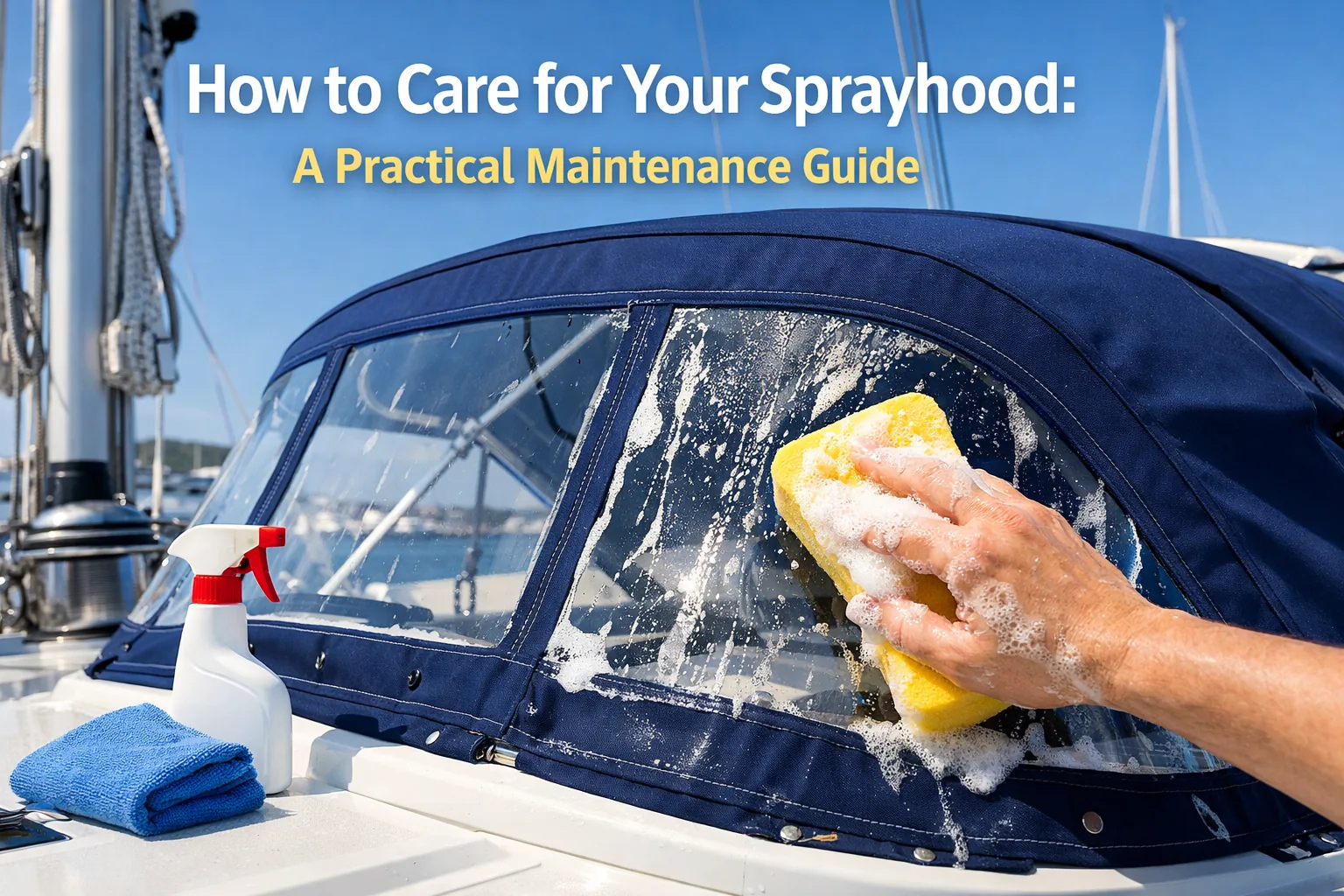
Your sprayhood is one of the hardest-working pieces of equipment on your boat. It cops UV, salt spray, rain and wind year-round — so a bit of regular maintenance goes a long way towards keeping it in top condition and avoiding a costly replacement.
Regular Cleaning
The single best thing you can do for your sprayhood is keep it clean. Salt crystals left on the fabric act like tiny lenses, concentrating UV and accelerating degradation. After every passage, or at least monthly if you’re on a mooring, give it a rinse with fresh water.
For a deeper clean every few months, use lukewarm water with a marine-specific canvas cleaner. Avoid household detergents — they strip the DWR (Durable Water Repellent) coating that keeps the rain out.
Protecting the Frame
Stainless steel frames are low maintenance but not maintenance-free. In the Solent’s salt-laden air, even 316-grade stainless can develop surface corrosion — those brown “tea stain” marks you’ll often see. Wipe the frame down with fresh water regularly and apply a stainless steel protector once or twice a season.
Check the hinge points and pivot joints for wear. A drop of Teflon-based lubricant keeps them operating smoothly. If you hear grinding or feel resistance when raising or lowering the hood, the bushes may need replacing before the frame distorts.
Window Care
Clear PVC windows are the most vulnerable part of any sprayhood. Here’s how to keep them clear:
- Clean with fresh water only — never use glass cleaner, solvents or abrasive cloths
- Use a dedicated PVC polish to maintain clarity and UV protection
- Never fold windows in cold weather — roll them loosely to prevent permanent creasing
- Store with tissue paper between folds if you must fold them, to prevent surfaces sticking together
Reproofing
Acrylic canvas comes with a factory-applied water-repellent treatment, but this wears off over time. You’ll know it’s time to reproof when water stops beading on the surface and starts soaking in.
Wait for a dry day, ensure the canvas is clean and fully dry, then apply a spray-on reproofing product designed for acrylic marine canvas. One coat is usually enough — don’t overdo it, as excess product can clog the fabric’s breathability.
Seasonal Storage
If you’re laying up for winter, leave the sprayhood up rather than removing it — the frame keeps the canvas tensioned and prevents creasing. If you must remove it, store it loosely rolled (never folded) in a dry, ventilated space.
Know When It’s Time
Even well-maintained sprayhoods have a lifespan. Acrylic canvas typically lasts 8–12 years depending on exposure. Signs it’s time for a replacement include:
- Thread breaking along multiple seams
- Fabric feeling thin or papery
- Persistent leaks that reproofing won’t fix
- Windows too clouded or cracked to see through
- Frame joints worn beyond adjustment
If your sprayhood is showing its age, we can template and build a replacement to the exact same pattern — or take the opportunity to improve the design. Contact us for a free assessment at your marina.
Leave a Reply